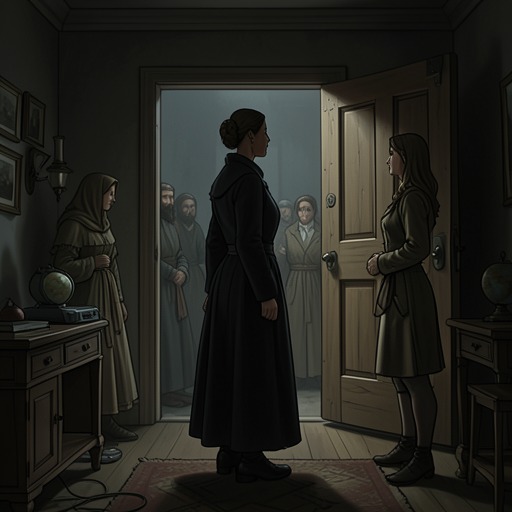
Amaia’s Twin Sister’s Death and the Discovery of Her Empty Grave
Ofrenda a la tormentaAmaia Salazar’s twin sister was officially said to have died of crib death, yet the coffin supposedly holding her remains was empty. When Amaia opened it, she found bags of gravel arranged to make it seem weighted with a body. The discovery unsettled the accepted account of her sister’s death and became an early, intimate instance of the empty-coffin mystery that recurs in the investigation.
The Official Account
Amaia tells Elena that she was born beside a twin sister who officially died of crib death. The evidence gives no further details about the sister’s death or the circumstances of her burial; its force lies in the gap between the accepted record and what Amaia later found. A death treated as settled had left behind a grave that could not verify the story attached to it.
The Empty Coffin
About a month before Amaia recounts the discovery to Elena, she opened a white coffin in the family tomb in a cemetery in San Sebastián. Instead of her sister’s remains, she found bags of gravel placed at the bottom to pass for a body. The substitution was not merely an empty space: the weight had been deliberately simulated, making the coffin appear to contain what was missing.
That detail takes on added significance when Amaia later encounters another empty coffin. In Valentín Esparza’s case, bags had likewise been placed inside an empty coffin to imitate a body. The parallel does not establish who removed Amaia’s sister or explain why; it does make the earlier discovery part of a recurring investigative pattern rather than an isolated family anomaly.
What the Discovery Changes
When Amaia tells Elena that she located the grave but found the coffin empty, Elena’s reaction is immediate and physical: she asks where the sister is buried, breaks down, and orders Amaia out of her house. The discovery brings the unresolved absence into the present, but it offers no answer about the missing remains or the sister’s actual fate.
The empty-grave question also matters beyond Amaia’s family. Yolanda Berrueta later reflects that, had the twins’ tomb been opened and appeared to confirm the expected account, no one might have noticed that her baby was missing; she fears that people would have continued to dismiss her as delusional. Her reflection places the search for absent infant remains against the danger of treating maternal grief as proof of madness rather than as a claim that must be investigated.
Narrative Significance
The event joins bereavement to forensic uncertainty. A grave ordinarily stands as material confirmation of death and a place where the living can locate the lost; here, the coffin’s contents undermine that assurance. The gravel bags make the absence tangible while also showing how an appearance of burial could be manufactured.
The evidence does not identify who emptied the coffin, establish the manner of the twin’s death, or confirm what became of her remains. That unresolved boundary is central to the event: Amaia’s discovery does not close a childhood loss but exposes how little the official account can prove, and why apparently settled infant deaths and burials require scrutiny.